
TAKING SIDES
John and Paul go to war over the next single. LARA PRENDERGAST hears the opening shots.
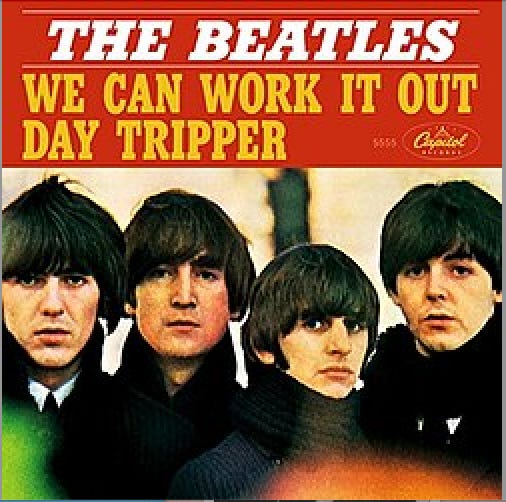
We invariably met at the Marquis of Granby on Shaftesbury, on late fall afternoons when the light was thinning and tempers tended to rise. I’d order a pint of Guinness; Paul, a whiskey sour. His sailor’s cap sat so low on his brow that only his mouth was visible — useful, given that his mouth was doing most of the work. No shame in confessing to my readers: I adore this job.
“John’s song is okay,” Paul murmured in my direction as he set down his glass, leaning in just far enough to signal mischief. “But mine’s better. No question who’s the A-side. He’s stuck on Day Tripper. I mean — come on. It’s a rocker. Fine. Whatever. I’ll grant it has its appeal…we’re off the record, right?”
John, naturally, had his own gospel.
“Paul’s tune is commercial, I’ll grant it that,” he said, eyes narrowing with a kind of lethal amusement. “Anything else? No fucking comment.”
Those barbs were still ringing when, a few mornings later, I was jolted awake by George Martin — producer, gentleman, and now, apparently, man on the brink. He’d reached the end of the line in refereeing this latest Lennon-McCartney contretemps.
“Lara, you’re my last hope,” George said, with the strained politeness of a wounded man who’d sooner face a scolding Guardian critic than another round of John and Paul’s endless bickering. “Someone has to talk to both of them and find common ground, at long last.” He paused — pained, pleading. “And we’ve all agreed: only you can fix this.”
A challenge to save the Beatles?
Right then. Coat on. Notebook in bag. I’m off.
***
If one listens with even a modestly trained ear — and ideally with a glass of something impertinent within reach — one hears immediately why this particular pairing ignited yet another Lennon–McCartney skirmish over the sacred, tyrannical question of the A-side. These were not merely two tracks jostling for position on a single. They were two competing philosophies, two self-portraits in pop form, each insisting on its primacy.
Day Tripper, John’s chosen champion, is the Beatles at their most rakish and metropolitan. It is Lennon’s worldview distilled into music: cynical, cocky, amused by its own cleverness, and armed with a punchline sharp enough to draw blood. For John, of course this was without question the A-side. It captured the band unbuttoned, ironic, and just a bit dirty-minded — qualities he privately believed were their essential truth.
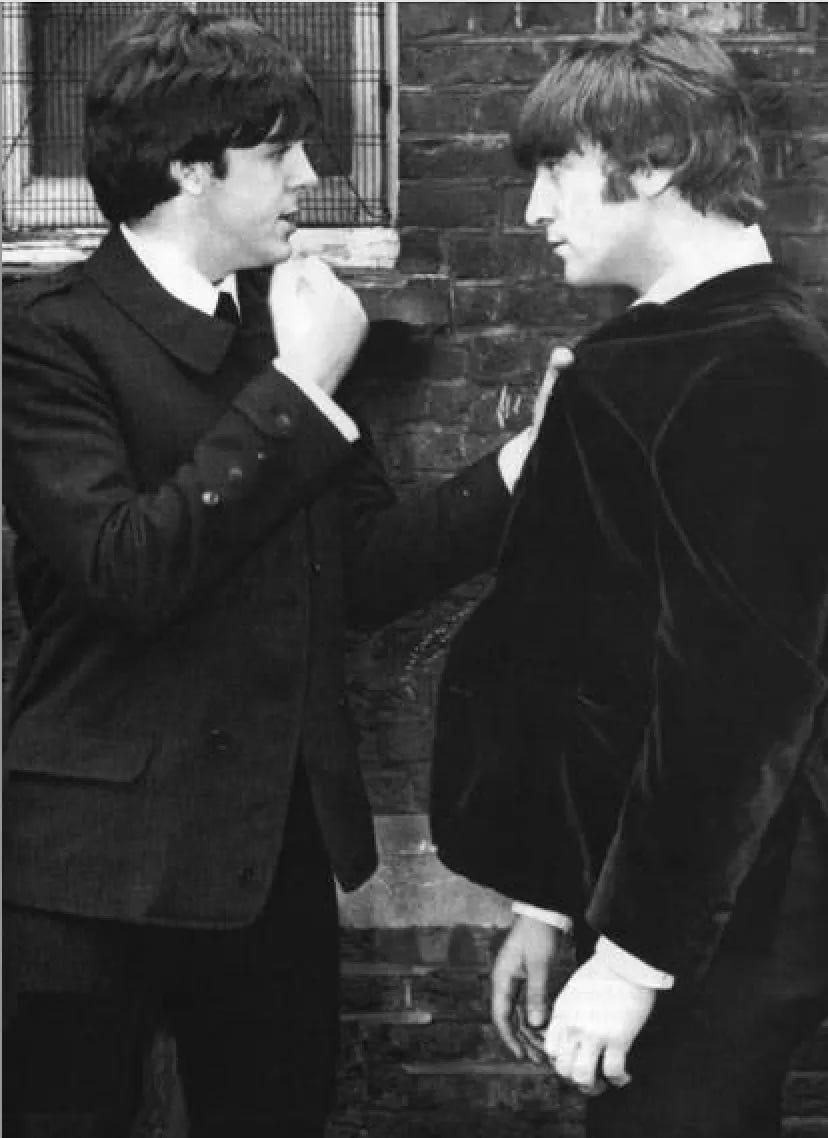
Paul’s We Can Work It Out, however, offers a more disarming measure of mastery. Diplomacy has been rendered melodic. The song serves as a hymn to negotiation, a plea for equilibrium, the sonic equivalent of straightening the furniture after a quarrel. Paul’s verses are gracious, structuring the emotional chaos into something orderly.
And then — crucially — John’s middle eight barges in like a visiting existentialist with a cigarette and a warning that life is short, not to mention meaningless. Even here, within Paul’s own composition, the tension between their outlooks flickers like a candle in a draught.
It doesn’t take Scotland Yard to discern the makings of a melee between the two. Day Tripper, beneath the irresistible riff, also carried a dig at the sort of half-committed dabblers of the world — the ones, as he once archly put it, who “talk big but don’t take the trip.” The subtext wasn’t lost on anyone. Paul, who had not yet boarded the mind-bending chemical express that John and George were quietly exploring, heard the taunt loud and clear. Meanwhile, Paul’s “We Can Work It Out” was hardly an innocent bystander. Even the patient, plaintive lyric John offered Paul as a middle eight — there’s no time for fussing and fighting, my friend — read like a pointed memo to John: stop sulking, stop dictating, come back to the table. It was little more than an argument — a musical exchange of hostilities, leaving it to the pop charts to declare a victor.
***
It should surprise no one, least of all those acquainted with the peculiar alchemy of their partnership, that each man regarded his song as the rightful monarch of the spindle. Paul sensed that the world might first need a dose of tenderness, of reasonableness, of emotional clarity before flipping to John’s flippant tune. Whereas John suspected, with his customary caustic disdain, that what the world truly needed was a wicked wink and a guitar line that swaggered. And thus the battle lines were drawn.
To place the two tracks side by side is to see the pair in all their contradictory splendour: Lennon’s sardonic bravado squaring off against McCartney’s orderly optimism. It is not merely that one song rocks and the other soothes; it is that one insists the world is absurd, while the other believes it might yet be repaired. Their argument over the A-side was therefore not trivial bickering but rather a referendum on what the Beatles were — and, more dangerously, what they ought to be.
Artists, after all, vent most violently when their very identities are at stake.
***
In the end, of course, the matter could not be resolved by logic, nor by charm, nor even by the usual McCartney maneuvers involving tea, persuasion, and a raised eyebrow of lethal sweetness. The quarrel over the A-side had metastasized into something larger — a mostly unspoken contest of self-definition. For all their internecine fireworks, the Beatles possess an instinct for survival that borders on the miraculous. And so, inevitably, the conversation drifted toward that most British of institutions: the compromise.
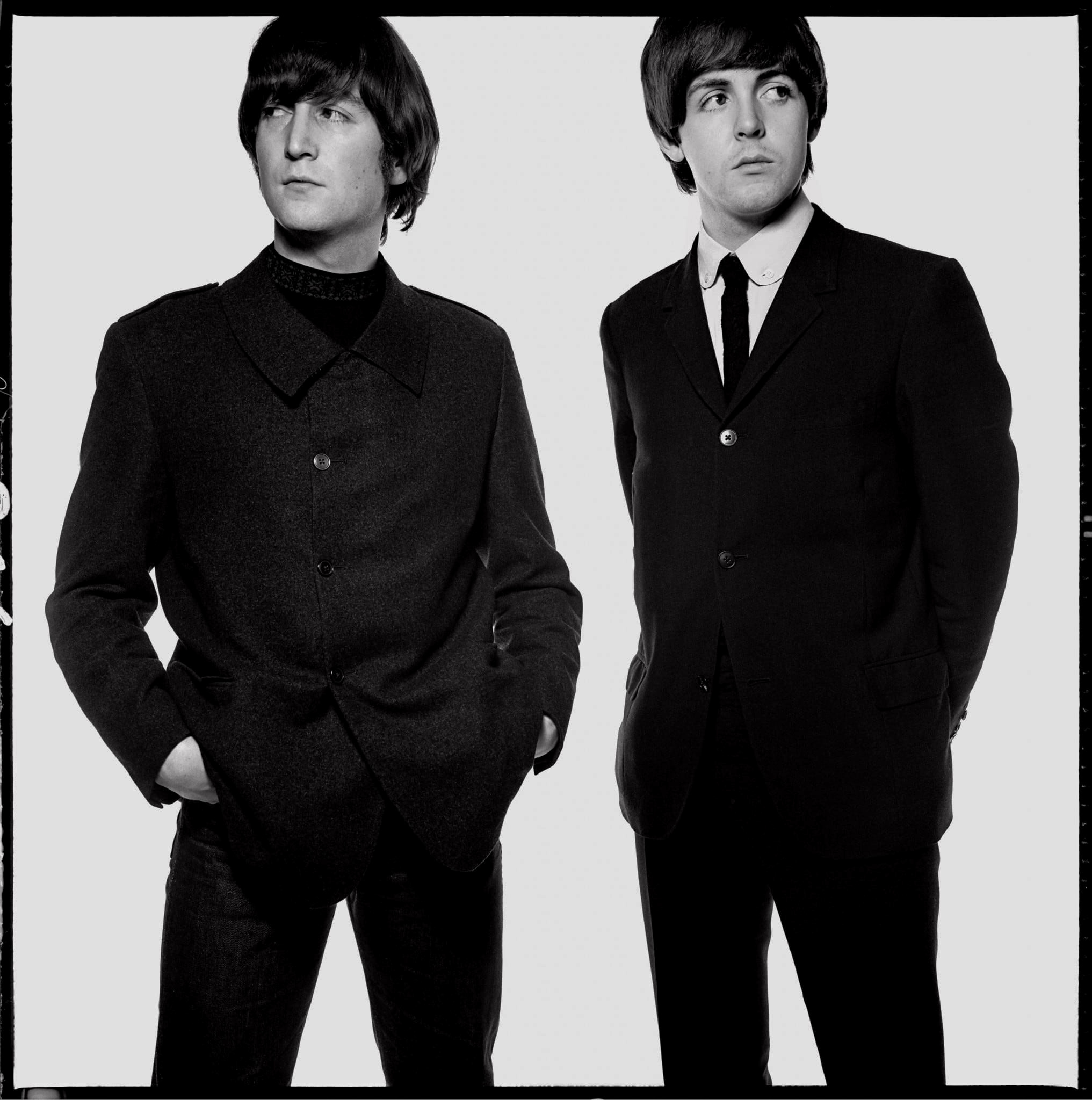
It was not a truce forged in harmony, but rather in mutual exasperation. John, recognising that he could not reasonably demand the top slot without provoking an ecclesiastical crisis within the partnership, conceded just enough to appear magnanimous. Paul, knowing full well that We Can Work It Out had the broader melodic reach, elected not to press his advantage too hard. What resulted was something curiously modern for a group so wedded to tradition: the double A-side, a diplomatic invention worthy of the Foreign Office.
One must appreciate the subtlety of the solution. It permitted each man to preserve his vanity intact. John could maintain that the world would discover Day Tripper as the true jewel, while Paul could rest serenely in the knowledge that radio programmers would drift, by sheer gravitational pull, toward his tuneful rendering. It was the perfect détente—each songwriter secretly convinced he’d won, each privately certain the other would realise it in due course.
This, I’ve found, is the real meaning of the so-called compromise: not agreement, but coexistence. The Beatles did not solve their dilemma; they simply devised a mechanism by which both truths could stand. And that, in its way, is the finest portrait we possess of Lennon and McCartney at this moment in their partnership. Two men bound by genius, divided by temperament, and rescued—always—by the curious alchemy that emerges only when they grudgingly meet in the middle.
One senses, listening to the single, that the two sides do not cancel each other out, but rather complete a circuit. The spark between them is the point.
Buy it and you’ll see. The double A-side is not a compromise between two Beatles; it is a confession by both of an essential Beatles truth. John and Paul shine most brilliantly together when neither is allowed to win.
-30-
Another great column!! Lara is the best :)