
THE IN CROWD
Being a Beatle isn’t enough for Paul McCartney. LARA PRENDERGAST says he wants cool friends, too.
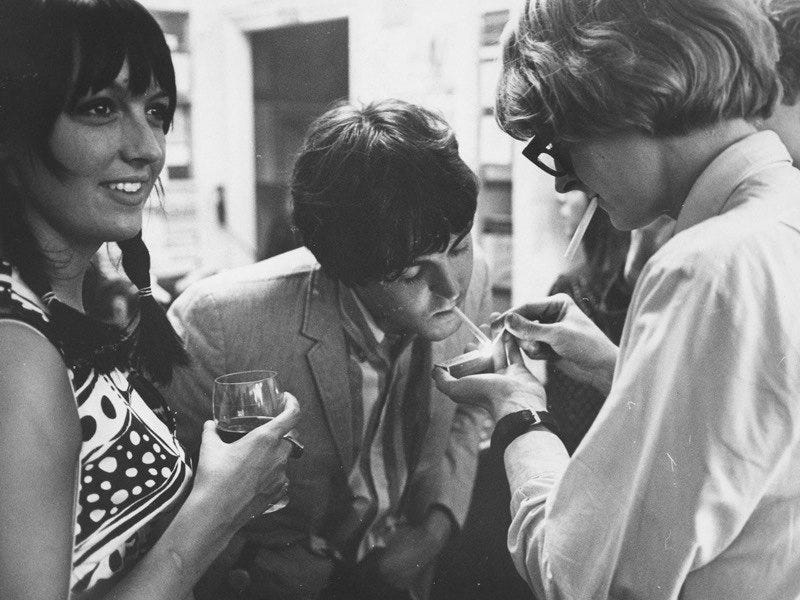
As I was walking home from my latest assignment — a low-key lunch in Marylebone with the so-called Cute Beatle, who is to cute what Brigitte Bardot is to bodacious — I had a revelation. It happens.
To be fair, the impetus for my ingenuity belongs to the American soul singer Dobie Gray, whose hit tune The “In” Crowd —13th on Billboard’s Top 100 just last year — came flooding back as I replayed my recollections of our tête-a-tête. The respect-seeking mentions that littered our lunch table like crumbs from a baguette – those random reflections made sudden sense as I replayed the song’s lyrics through the prism of Paul’s persnickety habit of wanting whatever he hasn’t got:
I’m in with the in crowd!
I go where the in crowd goes.
I’m in with the in crowd!
And I know what the in crowd knows.
See what I’m getting at?
Yes, readers, it’s true. Paul McCartney has lately found fault in being “just” a Beatle. It seems he seeks further recognition as an intellectually curious 23-year-old on the road to respect. You’ll see him on that road, behind the wheel of his trusty Aston-Martin DB6.
And here I thought worldwide fame, endless riches, and hot-and-cold-running birds were quite enough for one lifetime. Silly me.
✦ ✦ ✦
There are days like today, when Paul presents himself like a choirboy who’s wandered his way into adulthood and decided to stay awhile. Those earnest doe eyes. That polite, erect posture. His careful, almost bashful way of seeming wholly sincere while quietly clocking everything in the room. It is a very convincing act — and while perfectly legitimate, it also serves as an elaborate tease.
We’re meeting as part of C.J.’s planned “A Beatle, Observed” series of personality profiles — though not at Jane Asher’s family townhouse, where Paul currently resides. Instead, he proposes a quiet lunch at the deliberately discreet Montagu dining room in the Langham Hotel on Portland Place. It’s the sort of scene where one might say they wish to go unnoticed, while failing miserably. Paul pulls up in a taxi precisely at 1:00 p.m., as arranged, with a freshly purchased paperback tucked under his arm.
It’s In The Bronx and Other Stories by an American beat poet named Jack Micheline — the sort of book whose gut-wrenching seriousness seems to beg for buffoonery. Perhaps that’s why Paul pulls out his bookmark and opens the tome to offer me a morsel of its provocative prose.
“Lucie put her panties on…” Paul reads aloud with utmost gravity, then shoots me a wink I’ll wear to my grave. He’s perfectly content to reveal himself as a Serious Young Man at every turn, yet is also possessed of an acute sense of self-mockery. He knows I catch his drift.
After two hours of what might best be described as state-of-the-art hobnobbing, I can reliably report that Paul is an improbable cacophony of combinations: rigorously organized yet incurably mischievous, neat in appearance yet restless in temperament. He gives the distinct impression of someone who cannot bear to waste a moment — not because his time is precious (though it is), but because his curiosity is ravenous.
London suits him royally in this regard. He likes to move through the urban jungle unaccompanied, unannounced, and preferably unnoticed. He will do the noticing, thank you very much.
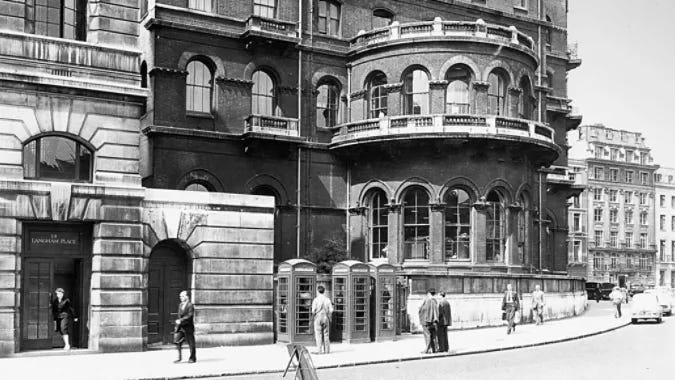
“I love the look of London,” Paul says.
I can’t help myself. I blush and blurt, “London loves the look of you, too!”
Paul nods in gratitude and seems unfazed by the sideways glances of every bird on every block. But the accoutrements of fame enjoyed by other Beatles — chauffeurs, tinted windows, theatrical fuss — leave him rather cold.
“I’m thinking of getting a bicycle with black windows,” Paul says, digging into his mashed potatoes, tossing off comic asides as though casually auditioning for That Was The Week That Was. If I were to write a humorous horror story about Paul McCartney for Ellery Queen, I’d probably call it The Wit and the Pendulous. Apologies to the unamused.
✦ ✦ ✦
Naturally, I know Paul prefers slipping in and out of places, disguises at the ready, pseudonyms deployed when necessary. Still, I was genuinely surprised when he told me — clearly aligned with the absurdity — that he’d written Woman, a recently-released Peter & Gordon single, under the name Bernard Webb. He claims he wanted to prove to the world that his name might mean more than the music itself.
But did Paul accomplish that goal? He seems awfully determined to ensure that the fictitious Mr. Webb does not, under any circumstances, become more successful than the actual Beatle behind the curtain. Listen to the song if you doubt me.
“I vaguely mind people knowing anything I don’t know,” he concludes confusingly, as our croque monsieurs arrive at the table.
That sentence, tossed off lightly, explains more about Paul McCartney than any number of earnest Beatle biographies currently being whispered about into publishers’ ears. He is embarked on a campaign of intellectual over‑indulgence — one he discusses with a peculiar blend of faint embarrassment and unmistakable excitement.
“I don’t want to sound like Jonathan Miller going on,” Paul says, name-checking the noted British intellectual whilst taking heroic bites of his sandwich, “but I’m trying to cram everything in — all the things I’ve missed. People are saying things and painting things and writing things and composing things that are great, and I must know what people are doing.”
This hunger to learn has even driven the Beatle back to school — voluntarily, no less. Once a week, the multi-millionaire takes music lessons from the prominent young classical composer Richard Rodney Bennett, a fact that no doubt surprises both of them.
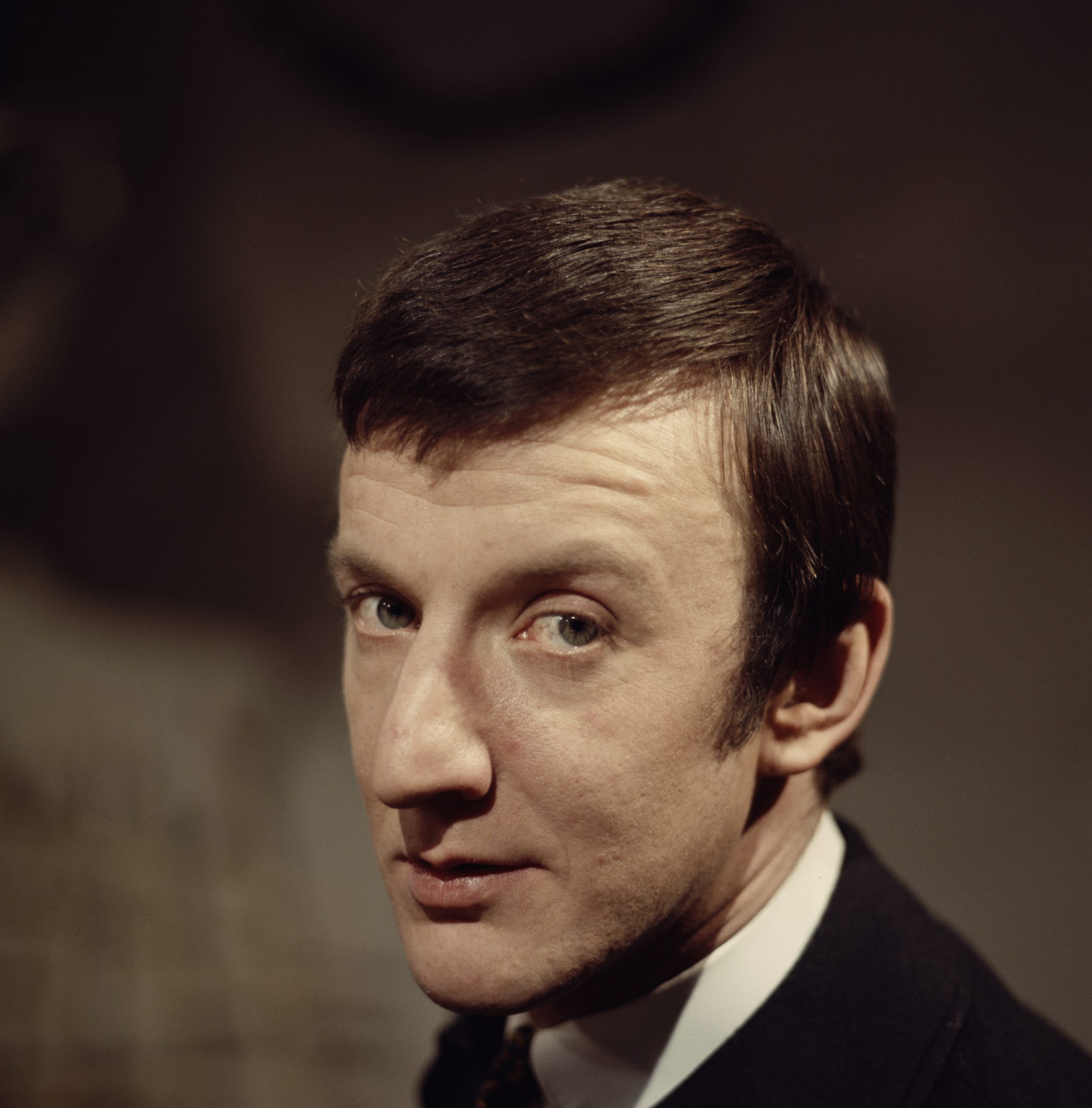
Ambition, for Paul, has never been abstract. As a boy, standing in his mother’s backyard, he tried to imagine his future. “No answer came back to me,” he says, still faintly wounded by the world’s lack of interest.
As a mop top teenager, when the prospect of teacher‑training presented itself with all the wretched odor of resignation, he recoiled instinctively.
“I had a horror of doing something ordinary,” he now admits.
Fortunately, the solution has revealed itself to Paul with remarkable clarity, as he settles into his celebrity status. “With things I don’t want to do,” he says, “well, I just don’t do them.”
As we all know by now, he emerged from adolescence as a beloved Beatle — though he tells the story as though it were less destiny than shared intuition among four mismatched Liverpudlians who simply wouldn’t give up.
“We knew something would happen sooner or later,” Paul says. “We always had this little blind Bethlehem star ahead of us.”
✦ ✦ ✦
Celebrity, meanwhile, has become another contradiction in terms. He finds it both plainly absurd and oddly underwhelming.
“Fame in the end is getting off your parking fine because he wants your autograph,” he muses aloud whilst waving down our waiter for a second glass of Pouilly-Fumé. “And fame is being interrupted when you’re eating by a 50-year-old lady with a ponytail. The four of us are known to almost everybody in the world, but we don’t feel that famous. I mean, we don’t believe in our fame the way Zsa Zsa Gabor believes in hers.”
If nothing else, money has taught him restraint, owing mostly to having too much of it. “I like the idea of anything grand and rich as a novelty,” he says. “I like chauffeurs as a novelty.”
Then, with a storyteller’s instinct for contrast, he brings up his brother-in-yarns, John Lennon:
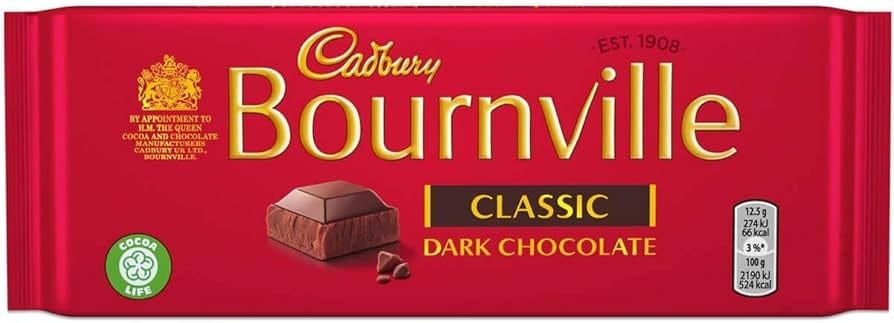
“John discovered the other day that he liked Bournville chocolate,” he says, his left eyebrow arched almost to the chandelier. “Well, he bought a consignment. I mean, it was on every table in the house, and in a week he was pretty sick of it. I’ve learned to do things in clumps.”
And the moral, delivered gently but firmly:
“I mean, if you can have everything, there’s no point in having everything, is there? I don’t think I want much more money. What’s that George always says? It’s all too much.”
✦ ✦ ✦
On the prospect of growing old, Paul is at once removed and reflective. “That wore off,” he says, of his earliest anxieties about aging. “If our bodies stayed young, our minds would have to stay young — and nobody wants that.”
Still, he allows himself a model for sowing his mild oats.
“Bertrand Russell seems all right — I wouldn’t mind being like him at all,” Paul says of the philosopher who needs no introduction. There’s a seafood dinner with 93-year-old Bert on the books for next Wednesday. Just in case, Paul plans to bring the Nobel laureate a lobster bib.
Paul may admire distinguished elder statesmen with billowing beards, but delights equally in the way youth unsettle the old order.
“There they were in America,” he says, “all getting house-trained for adulthood with their indisputable principle of life: short hair equals men, long hair equals women. Well, we got rid of that small convention for them.” Indeed they did — and at no additional charge.
As we part, Paul mentions a new song he’s just jotted down. Something about loneliness and age. He recites for me the curious opening line: “Eleanor Rigby picks up the rice in the church where a wedding has been.” Its deeper meaning eludes me. But no doubt Eleanor is a cool, cultivated bird with a brain Paul hopes to pick sometime soon.
-30-